
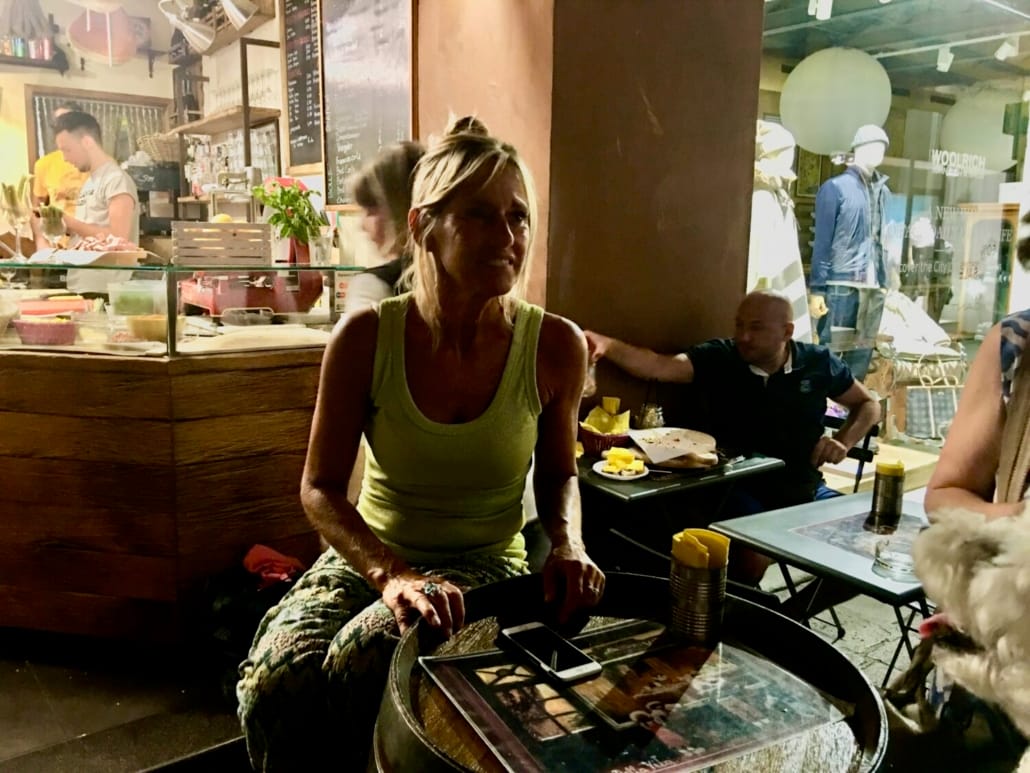
A Table for One – The Rise of the Solo Consumer
Editor’s note:
How often has this happened to you?
You walk into a restaurant by yourself and the maitre d’ greets you with the words ” Is it just for one?”
Often the words are accompanied by an expression of surprise if not downright pity, mixed with a reluctance to waste a table for four on just one person.
It is dispiriting and turns dining out solo into an act of courage.
It happens to men, but it is particularly corrosive to the self-esteem of women. I have written about this in the past.
But now it appears that restaurants that discourage solo diners are ignoring the changing global demographics that are
impacting on the economies of many countries.
We are seeing the emergence of what Dr Joseph Coughlin calls “ the solo consumer“.
One-person households now account for nearly one-third of all U.S. households, and estimates suggest that 35% of households globally will be households of one.
It is now evident that discouraging solo diners is not only disrespectful, but is just plain bad for business.
In terms of numbers, solo diners are actually an economic force, not a liability.
We might reinforce that economic trend and help change the disparaging treatment by patronising restaurants that welcome women solo diners.
WomanGoingPlaces is pleased to feature this article below by Dr Coughlin.
Dr Joseph F. Coughlin is the Director of the Massachusetts Institute of Technology AgeLab (agelab.mit.edu). He teaches in MIT’s Department of Urban Studies & Planning and the Sloan School’s Advanced Management Program. Coughlin conducts research on the impact of global demographic change and technology trends on consumer behavior and business strategy.
_____________________________________________________________________
From Solo Dining to Solo Living
A table for one may look like a restaurant trend. It’s actually a demographic signal.
I travel a lot. As a result, I eat out alone more than most people. What fascinates me is not the meal. It’s the moment I arrive at the front door.
The host looks up and asks:
“Just one?”
The question is usually followed by a brief look that I’ve never quite figured out. Is the host feeling sorry for me? Wondering whether I’ve been stood up? Or quietly disappointed that a table designed for four is about to generate a bill for one?
Whatever the explanation, the moment reveals something interesting.
Walk into almost any restaurant, and the number is everywhere. Tables for two. Booths for four. Family-style seating. Date-night specials. Even the business’s economics often assume that customers arrive with someone else.
Increasingly, they don’t.
According to industry reports, reservations for solo diners have surged since 2019. Nearly three in ten Americans now report dining alone at least once a week. Among younger adults, the behavior is even more common.
At first glance, this may appear to be a restaurant trend. It is actually a demographic signal.
For years, I have argued that one of the most important forces reshaping business is not simply aging.
It is the changing structure of households and relationships.
Longevity is not simply adding years to life. It is reshaping the structure of everyday life.
Americans are marrying later. More people remain single throughout adulthood. Divorce, particularly among those over 50, has increased. People are living longer after the loss of a spouse. One-person households now account for nearly one-third of all U.S. households.

The trend extends far beyond the United States. Globally, single-person households are projected to continue growing over the coming decades – estimates suggest that 35% of the world’s households will be households of one. More people than ever are navigating life as individuals rather than as part of a couple or family unit.
The result is the emergence of what might be called the solo consumer.
Not lonely. Not isolated. Simply living, purchasing, traveling, deciding, and increasingly aging as an individual.
That reality is showing up on a restaurant’s bar seat, booth, or corner table by the window.
Alone, Not Lonely
Importantly, this does not appear to be primarily a story about loneliness.
Many solo diners report that they choose to dine alone because they enjoy the freedom. They can eat what they want. Go where they want. Stay as long as they want.
For many, dining alone is not a sign of social isolation. It is an expression of autonomy.
Businesses are often slow to recognize the difference between a social problem and a consumer preference. The restaurant industry may simply be the first industry encountering this shift at scale because dining is such a visible social activity.
Restaurants are responding. Some are creating counter seating specifically designed for individuals. Others are redesigning service models, technology, and layouts to reduce the friction of single-table occupancy.
What appears to be a seating decision is actually a response to demographic change.
When Assumptions Become Liabilities
The restaurant story is about more than booths and bar stools. The more interesting question is this:
What happens when the number a business assumes no longer matches the customer it serves?
Every business is built on assumptions. Some assumptions are explicit. Most are hidden. Most are so ingrained that we never question them.
They are embedded in floor plans, pricing, staffing models, customer journeys, marketing campaigns, products, and services.
Demographic change becomes disruptive when those assumptions no longer match reality. Consider a few other industries beyond restaurants where assumptions about their customer may need to be revised.
Travel
For decades, travel economics have been built around couples and families. Double occupancy remains the norm. Cruise cabins, hotel rooms, vacation packages, and resort marketing frequently assume two people sharing an experience.
Yet solo travel continues to grow.
Housing
Much of America’s housing stock was designed around family formation. Yet household size has steadily declined for decades while one-person households continue to rise.
Financial Services
Many financial products implicitly assume a spouse, partner, or family member involved in decision-making. Yet more Americans are making financial decisions independently. Consider the benefits offered by employers, do they match the realities and needs of an increasing number of employees who live alone?
Healthcare
Healthcare systems frequently assume the presence of a family caregiver. Someone who will drive the patient home, manage medications, prepare meals, monitor recovery, and respond when something goes wrong.
Yet millions of Americans increasingly return from the hospital to an empty home. This is the kind of challenge emerging in what I have called the Complexity Economy where the value is increasingly found not in providing a product or service, but in helping people navigate increasingly complicated lives.
The assumptions remain. The customer has changed.
A Table for One Is a Demographic Signal
What makes solo dining such an interesting signal is that it sits at the intersection of several powerful forces: longer lives, smaller households, delayed marriage, remote work, greater economic independence, and changing attitudes toward individual experiences.
The question for leaders is not whether demographics are changing. They are.
The question is whether the assumptions embedded in your business are changing with them.
If you liked our post, please consider becoming a supporter of
A social enterprise advocating for economic security and social inclusion of Australian women aged 50+.
We campaign against the discrimination and general invisibility women 50+ face.
We tell the stories of women 50+ who are re-defining how women age.
SUBSCRIBE to receive latest posts in your Inbox.
SUPPORT our advocacy and keep us accessible to all women.


Yes certainly had this experience in Europe going to restaurants..Oh just you..as they gaze behind for a possible straggling partner 🤣
Thank you Sue. It does seem to be a problem that follows us wherever we go. Maybe attitudes will change if it’s good for business.